
How TCM Supports Digital Eye Strain and Eye Wellness
Our eyes work hard every day. Between computers, smartphones, tablets, and other digital devices, prolonged screen time has become a normal part of work and daily life.
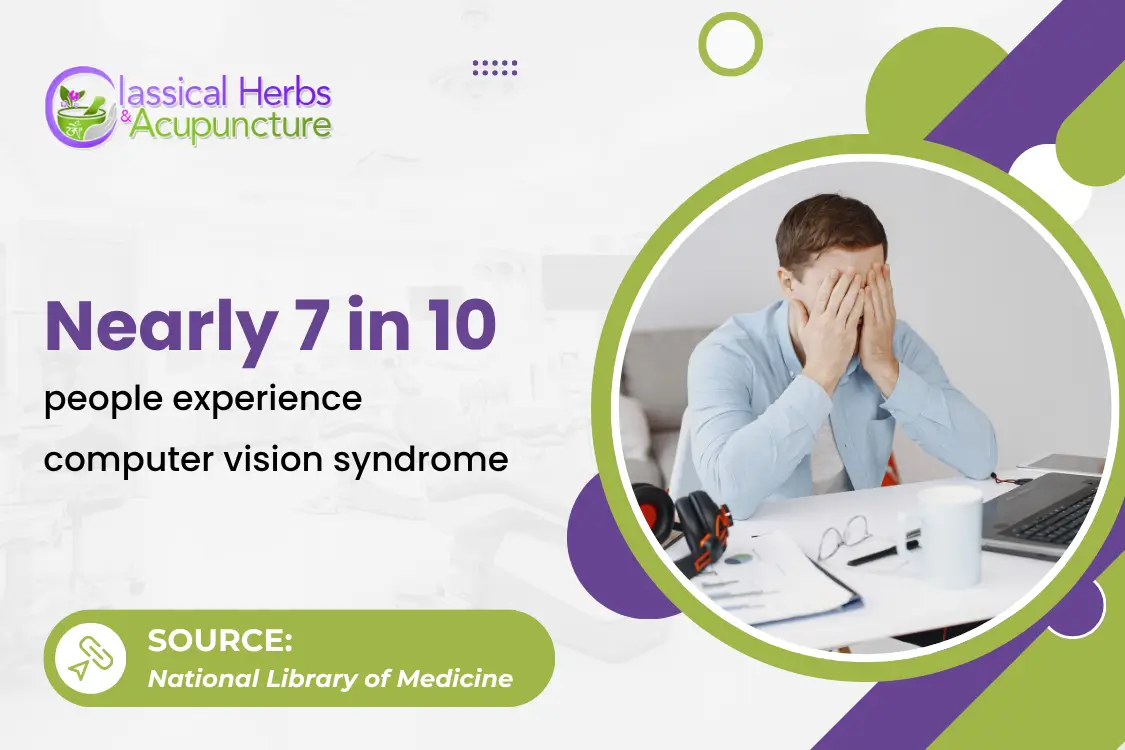
In fact, a study involving more than 66,000 participants estimated that about 69% had computer vision syndrome. While conventional medicine focuses on identifying and treating specific eye conditions, Traditional Chinese Medicine (TCM) takes a broader approach to supporting eye wellness.
In this blog, we’ll explore what digital eye strain is, how TCM approaches eye wellness, what current research says about acupuncture and Chinese herbal medicine, and simple everyday habits that can help give screen-tired eyes a break.

Key takeaways:
What Is Digital Eye Strain?
Digital eye strain, also called Computer Vision Syndrome, refers to a group of symptoms that can occur after prolonged use of computers, smartphones, tablets, and other digital devices.
Common symptoms include:
When you’re concentrating on a screen, your eyes spend long periods focusing at a relatively close distance. Screen use can also affect blinking and involve prolonged periods of uninterrupted near work, which may contribute to discomfort.
And digital eye strain is far from uncommon. As mentioned previously, a study found that about 69% have experienced computer vision syndrome. So if your eyes feel tired after a long day of screen use, you’re certainly not alone.
How Does TCM View Digital Eye Strain?
TCM doesn’t have a traditional diagnosis called digital eye strain. In TCM theory, the eyes are closely associated with the Liver system, and healthy vision is traditionally connected with the nourishment and circulation of Qi and Blood.
Because of this whole-person approach, practitioners may look beyond the eyes themselves when considering symptoms related to prolonged screen use.
Licensed acupuncturist and TCM practitioner Dr. Carolyn Cook takes a whole-person approach, considering factors such as:
Sleep quality
How Can TCM Support Digital Eye Strain?
Depending on an individual’s symptoms and assessment, a practitioner may consider acupuncture, Chinese herbal medicine, or acupressure alongside healthy lifestyle habits.
Here’s what current research tells us:
The available research is encouraging, but we still need more high-quality studies to better understand how TCM may support digital eye strain.
In the meantime, Dr. Cook suggests incorporating TCM-inspired habits into our daily routines to give our eyes regular opportunities to rest and recover.
Simple TCM-Inspired Habits for Strained Eyes
|
|
TCM-Inspired Wellness Habit |
Application |
|---|---|---|

|
TCM-Inspired Wellness HabitGive your eyes regular rest. |
ApplicationFollow the 20-20-20 rule: every 20 minutes, look at something about 20 feet away for at least 20 seconds.
|

|
TCM-Inspired Wellness HabitPause and relax.
|
ApplicationDuring screen breaks, close your eyes for a moment or gently massage your temples and brow area. Keep pressure light and never press directly on your eyeballs.
|

|
TCM-Inspired Wellness HabitMove your body.
|
ApplicationDon’t let an eye break become another sitting break. Stand up, roll your shoulders, stretch, or take a short walk every hour.
|

|
TCM-Inspired Wellness HabitCreate screen-free moments.
|
ApplicationPut your phone away during meals, take a short walk without it, or spend a few minutes simply sitting and relaxing. A digital detox doesn’t have to mean going completely offline.
|

|
TCM-Inspired Wellness HabitWind down without a screen.
|
ApplicationBefore bed, swap late-night scrolling for a screen-free activity such as reading, stretching, breathing exercises, or enjoying a cup of tea.
|
These simple habits can give screen-tired eyes regular opportunities to rest and may help support overall eye comfort. But healthy screen habits are only one part of the bigger picture. If eye symptoms persist or interfere with your daily activities, look beyond screen time and seek an appropriate professional evaluation.
When Should You See an Eye-Care Professional?
While digital eye strain is common, not every eye symptom comes from screen use. An eye-care professional should evaluate persistent blurred vision, significant eye pain, sudden vision changes, flashes of light, new floaters, or other concerning symptoms.
TCM can be used as a complementary approach, but it should not replace appropriate eye examinations or medical treatment when needed.
Just like this patient’s experience, who has been struggling with double vision and palsy. Dr. Cook’s complementary approach through acupuncture and Chinese herbal medicine relieved some of their symptoms.
“I went to see Dr. Cook in March 2023. I had some issues with my vision and internal problems. Through Dr. Cook’s acupuncture treatments and personalized herbs, she helped me get back on track to a healthy state. It was a pleasure working closely with you, and I want to thank you for all you have done for my situation.” – Alexis
*Individual results may vary. This testimonial reflects one patient’s personal experience and does not guarantee results.
Support Your Eye Wellness with Miami Herbs
Our screens aren’t going away, and they don’t have to. What matters is creating healthier habits around them: taking regular breaks, moving throughout the day, getting adequate rest, and making time to step away from your devices.
For those interested in a more holistic approach, Traditional Chinese Medicine offers complementary practices such as acupuncture, acupressure, and individualized Chinese herbal medicine that may support eye comfort and overall well-being.
At Miami Herbs, licensed acupuncturist and TCM practitioner Dr. Carolyn Cook takes an individualized approach, considering your symptoms and overall health when developing a personalized wellness plan.

Ready to explore whether TCM may be right for you?
Contact Miami Herbs to schedule a consultation with Dr. Cook.
*Disclaimer: TCM is a complementary approach and should not replace appropriate eye examinations or medical treatment. Individual results vary. If you experience sudden, persistent, or concerning changes in vision, consult an appropriate eye-care or medical professional.
About Us
Sources:
Prevalence of computer vision syndrome. Lifted from
https://pmc.ncbi.nlm.nih.gov/articles/PMC10785422/
Combination of acupuncture and medication for dry eye complicated with computer vision syndrome; Lifted from
https://pubmed.ncbi.nlm.nih.gov/37802519/
Computer vision syndrome: a comprehensive literature review; Lifted from
https://pmc.ncbi.nlm.nih.gov/articles/PMC11901492/
Beyond the Liver: Liver-Eye Communication in Clinical and Experimental Aspects; Lifted from
https://pmc.ncbi.nlm.nih.gov/articles/PMC8740136/
Computer Vision Syndrome; Lifted from
https://my.clevelandclinic.org/health/diseases/24802-computer-vision-syndrome
Acupuncture for the Management of Dry Eye Disease; Lifted from
https://www.researchgate.net/publication/363834174_Acupuncture_for_the_management_of_dry_eye_disease